
UNESCO Chair PhD research

Camille Luna Stella Blavier
Cycle n°: 38
Department: dABC (Department of Architecture, Built Environment and Construction Engineering)
Supervisor: Prof. Claudio Del Pero
Co-Supervisor: Prof. Stefano Della Torre
Keywords: Climate Change Adaptation, Cultural Heritage Conservation, Climate Risk Assessment, Heritage Climatology, Built Heritage Resilience
Adapting Heritage Buildings to Climate Change: A Framework for Risk Assessment and Practical Solutions
This PhD research explores how historic buildings can be protected from the impacts of climate change through practical, site-specific strategies. Based on the principles of Heritage Climatology, the thesis presents a framework that helps conservation professionals assess climate risks and develop tailored adaptive solutions. The framework integrates high-resolution climate data, hazard mapping, and vulnerability analysis to identify current and future risks to building materials and structures. It is validated through a case study of the Tauberhof farmhouse in Trentino–South Tyrol, where projected climate scenarios (RCP 4.5 and 8.5) highlight increasing threats for 6 climate heritage indices out of 7 analysed. Specifically, hazards such as biological growth, lichen decline, wood degradation from fungi and insects, and damage from intense rainfall are expected to worsen, while frost-related impacts are projected to decrease. Designed to be scalable, accessible, and practice-oriented, the methodology broadens the scope of climate risk assessment to include rural and minor heritage buildings, which are often overlooked in such analysis. By bridging science and practice, this work supports the long-term resilience of cultural heritage and promotes the integration of climate expertise into conservation policy and professional practice.
Questa ricerca di dottorato esplora le modalità con cui gli edifici storici possono essere protetti dagli effetti dei cambiamenti climatici attraverso strategie operative specifiche per ciascun contesto. Basata sui principi della Heritage Climatology, la tesi propone un quadro metodologico a supporto dei professionisti della conservazione per valutare i rischi climatici e sviluppare soluzioni di adattamento mirate. Il metodo integra dati climatici ad alta risoluzione, mappe di pericolosità e analisi della vulnerabilità per identificare i rischi attuali e futuri a cui sono esposti materiali e strutture storiche. La metodologia è validata attraverso il caso studio del maso Tauberhof, in Trentino-Alto Adige, dove gli scenari climatici futuri (RCP 4.5 e RCP 8.5) evidenziano un aumento del rischio per sei dei sette indicatori climatici del patrimonio analizzati. In particolare, si prevede un incremento dei fenomeni di crescita biologica, della regressione dei licheni, del degrado del legno causato da funghi e insetti e dei danni dovuti a precipitazioni intense, mentre gli effetti legati al gelo risultano in diminuzione. Progettata per essere scalabile, accessibile e orientata all’applicazione pratica, la metodologia estende la valutazione del rischio climatico anche agli edifici rurali e al patrimonio minore, spesso esclusi da questo tipo di analisi. Integrando conoscenze scientifiche e pratica della conservazione, la ricerca contribuisce a rafforzare la resilienza del patrimonio culturale e a promuovere l’integrazione delle competenze climatiche nelle politiche e nelle pratiche di tutela.
Publications:
- Blavier, C.L.S.; Huerto-Cardenas, H.E.; Aste, N.; Del Pero, C.; Leonforte, F.; Della Torre, S. Adaptive measures for preserving heritage buildings in the face of climate change: A review, Building and Environment, 245, 2023. https://doi.org/10.1016/j.buildenv.2023.110832.
Huerto-Cardenas, H.E.; Aste, N.; Del Pero, C.; Della Torre, S.; Leonforte, F.; Blavier, C.L.S. Effects of Visitor Influx on the Indoor Climate of the Milan Cathedral. Atmosphere 2023, 14, 743. https://doi.org/10.3390/atmos14040743.
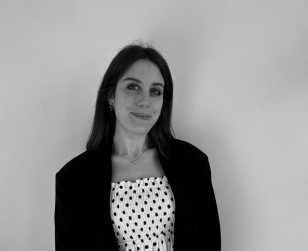
Miriam Terzoni
Cycle n°: 38
Department: dABC (Architecture, Built Environment and Construction Engineering)
Supervisor: Prof. Nora Lombardini
Co-Supervisor: Prof. Elisa Boeri
Keywords: Cultural Heritage Conservation, Post-war Reconstruction, Conflict and Cultural Heritage, Historic Urban Landscapes, International Heritage Policies
War damages in Peace time
Identification of the parameters used over time in the field of tangible Cultural Heritage conservation and re-construction in war-stricken contexts
This research investigates the conservation and reconstruction of tangible Cultural Heritage in war contexts, addressing a topic that has become increasingly relevant due to contemporary armed conflicts. Focusing on historic buildings and urban heritage, the study examines the fundamental questions that arise after destruction: what should be rebuilt, how, and according to which principles. Through a review of scientific literature and national and international regulations, the research identifies the parameters that have guided post-war conservation and reconstruction strategies. The analysis begins with a historical overview of major wartime destructions, concentrating on the post-Second World War period, when the main theoretical, methodological and regulatory frameworks were established. Particular attention is devoted to Italy, France, England and West Germany, whose reconstruction experiences provide significant case studies. These are analysed through a set of parameters, including socio-economic and political context, extent of damage, conservation and reconstruction approaches, urban layout, and functional reuse, enabling a comparative evaluation of different intervention strategies. In parallel, the research examines the role of international organisations in protecting Cultural Heritage during and after conflicts. Their actions are analysed according to two complementary dimensions—prevention and reconstruction—and grouped into three areas: humanitarian assistance, security enhancement and reconstruction initiatives. By combining the comparative analysis of European post-war experiences with the strategies promoted by international organisations, the study aims to identify shared intervention criteria, assess their effectiveness, and clarify the priorities that have shaped Cultural Heritage conservation and reconstruction in conflict situations.
La ricerca analizza i temi della conservazione e della ricostruzione del patrimonio culturale materiale nei contesti di guerra, una questione oggi di particolare attualità alla luce dei numerosi conflitti in corso. Concentrandosi sugli edifici storici e sui contesti urbani di valore culturale, lo studio affronta le principali questioni che emergono dopo la distruzione: cosa ricostruire, come ricostruire e secondo quali criteri. Attraverso un’analisi della letteratura scientifica e della normativa nazionale e internazionale, la ricerca individua i parametri che hanno orientato le strategie di conservazione e ricostruzione nel secondo dopoguerra. Dopo un inquadramento storico delle principali distruzioni causate dai conflitti, l’attenzione si concentra sull’Europa del secondo dopoguerra, con particolare riferimento a Italia, Francia, Inghilterra e Germania Ovest. I casi studio vengono analizzati e confrontati sulla base di specifici parametri: contesto socio-economico e politico, entità del danno, criteri di conservazione e ricostruzione, rapporto con l’impianto urbano originario e destinazione d’uso degli edifici. Parallelamente, la ricerca esamina il ruolo delle principali organizzazioni internazionali nella tutela del patrimonio culturale durante e dopo i conflitti, distinguendo le azioni di prevenzione e quelle di ricostruzione e classificandole in tre ambiti: assistenza umanitaria, rafforzamento della sicurezza e interventi di ricostruzione. L’integrazione tra l’analisi delle esperienze europee e quella delle strategie promosse dalle organizzazioni internazionali consente di individuare criteri ricorrenti di intervento, valutarne l’efficacia e comprendere le priorità che orientano oggi le politiche di conservazione e ricostruzione del patrimonio culturale nei contesti di conflitto.
Publications:
Terzoni, M., 2022 “Forgotten Heritage. Military defences of the Risorgimento period in the Mantuan side of the Mincio river” in Lombardini, N., Terzoni, M., (eds) Heritage Without Frontiers. Knowledge and protection of cultural heritage on the occasion of the 50th anniversary of the UNESCO World Heritage Convention and the 35th anniversary of the Erasmus student mobility actions, Roma: Aracne, pp. 249-270. ISBN 9791221805659
Lombardini N., Terzoni M., 2022 (eds) Heritage Without Frontiers. Knowledge and protection of cultural heritage on the occasion of the 50th anniversary of the UNESCO world heritage convention and the 35th anniversary of the Erasmus student mobility actions, Roma: Aracne. ISBN 9791221805659
Lombardini, N., Terzoni, M., 2023 “Cultural Heritage risk prevention: multidisciplinary levels to integrate actions for Cultural Heritage protection into already existing guidelines” in Rueda Márquez de la Plata, A., Cruz Franco, P.A. (eds) Tendencias y directrices para proyectos de restauración y propuestas de conservación sostenible también mediante la aplicación de nuevas tecnologías, Madrid: Dykinson S.L., pp. 184-191. ISBN 978-84-1170-609-4
Lombardini, N., Terzoni, M., 2024 “Awareness of context identity for the conservation of Cultural Heritage” in Cardaci, A., Picchio, F., Versaci A. (eds) ReUSO 2024 Documentazione, restauro e rigenerazione sostenibile del patrimonio costruito, Alghero: Publica, pp. 866-875. ISBN 9788899586454
- Lombardini, N., Terzoni, M., 2024 “The role of the authenticity in the post Second World War interventions and regulations in the historical centres: looking for parameters for re-construction” in Caccia Gherardini, S., De Vita, M. (eds) Restauro Archeologico 1964-2024 La Carta di Venezia. Riflessioni teoriche e prassi operative nel progetto di restauro, Firenze: Firenze University Press, pp. 216-221.
Lombardini, N., Terzoni, M., Velichanskaia, S. 2024 Abstract “Approaching a dissonant element: the case of Former Archaeological Museum in Tbilisi, Georgia” in Ippoliti, A., Svalduz, E. (eds) Beyond the gaze interpreting and understanding the city. Oltre lo sguardo. Interpretare e comprendere la città XI Congresso AISU / 11th AISU Congress PROCEEDINGS (publication of the full paper is ongoing), pp. 346-347. ISBN 9788831277082

Karolina Pieniążek
Cycle n°: 38
Department: DAStU (Department of Architecture and Urban Studies)
Supervisor: Prof. Davide Del Curto
Co-Supervisor: Prof. Luka Skansi
Keywords: Modern Movement Heritage, 20th-Century Architecture, Architectural Conservation, UNESCO World Heritage, Soviet Modernism
More than one modernism. Contemporary issues to preserve post-soviet architecture
This research advances the PhD program’s efforts to conserve 20th-century built heritage, recognizing the aging of key Modern Movement works and the unique conservation challenges posed by their innovative construction techniques and materials. It also addresses the theoretical issues raised by 20th-century architecture’s promotion to heritage status, investigating methodological progress in preservation driven by the growing interest in this architectural legacy and the ongoing challenges it faces. The research program seeks to deepen the understanding of modernism’s diverse global manifestations, prompting a conceptual rethinking of its cultural and geographical roots, as well as the contexts in which it emerged and flourished worldwide. Additionally, it explores strategies for preserving 20th-century architecture and protecting this fragile heritage from the numerous risks posed by global discontinuities, where built heritage often occupies a contested space and is vulnerable to conflicting interests. Over recent decades, 20th-century architecture has gained worldwide recognition, leading to significant efforts to safeguard its most renowned masterpieces. The inclusion of modernist works in the UNESCO World Heritage List (WHL) has expanded, particularly following the Global Strategy for a Representative, Balanced, and Credible World Heritage List (1994–2004), which aimed to increase attention to underrepresented and at-risk heritage. Numerous modernist sites have also been nominated for the UNESCO Tentative List, underscoring modernism’s integration into global heritage. However, most inscriptions remain concentrated in Europe and the US, while Asia, Africa, and other regions remain underrepresented. This imbalance paradoxically directs preservation efforts to areas with strong legal frameworks while leaving vulnerable heritage in regions where legal protections remain weak. A notable gap in representation concerns Soviet modernism, which played a crucial role in 20th-century modernization and left a significant architectural legacy across Europe and Asia. Today, many of these modernist structures—particularly those influenced by the late Soviet period—are at risk due to rapid urbanization, economic pressures, weak safeguarding measures, unstable political environments, and social or armed conflicts. In response, this research program will focus on the post-USSR regions of Europe, the Caucasus, the Baltic States, Central Asia, and Africa, addressing the urgent need for their preservation.
Questa ricerca si inserisce nel percorso del dottorato dedicato alla conservazione del patrimonio architettonico del XX secolo, riconoscendo l’invecchiamento delle principali opere del Movimento Moderno e le specifiche sfide conservative poste dalle tecniche costruttive e dai materiali innovativi che le caratterizzano. Al tempo stesso affronta le questioni teoriche legate al riconoscimento dell’architettura del Novecento come patrimonio culturale, approfondendo l’evoluzione degli approcci metodologici alla conservazione e le criticità ancora aperte nella tutela di questa eredità. Il programma di ricerca mira a rafforzare la comprensione delle molteplici declinazioni del Modernismo a scala globale, promuovendo una rilettura critica delle sue radici culturali e geografiche e dei contesti nei quali si è sviluppato. Parallelamente, indaga strategie per la conservazione dell’architettura del XX secolo e per la protezione di un patrimonio particolarmente fragile, oggi esposto ai rischi derivanti dalle trasformazioni economiche, sociali, politiche e ambientali, nonché dai conflitti armati. Negli ultimi decenni l’architettura moderna ha ottenuto un crescente riconoscimento internazionale, testimoniato dall’aumento delle iscrizioni nella Lista del Patrimonio Mondiale UNESCO e nelle Tentative List, soprattutto dopo la Global Strategy (1994–2004), che ha promosso una rappresentazione più equilibrata del patrimonio mondiale. Tuttavia, permane una forte concentrazione di siti riconosciuti in Europa e negli Stati Uniti, mentre Asia, Africa e altre aree risultano ancora sottorappresentate. Particolare attenzione è rivolta al patrimonio del modernismo sovietico, fondamentale nel processo di modernizzazione del XX secolo ma oggi fortemente minacciato da urbanizzazione, pressioni economiche, carenze normative, instabilità politica e conflitti. La ricerca concentra pertanto il proprio interesse sulle regioni post-sovietiche dell’Europa, del Caucaso, dei Paesi Baltici, dell’Asia Centrale e dell’Africa, evidenziando l’urgenza di sviluppare strategie efficaci per la loro tutela e valorizzazione.

Martina Borini
Cycle n°: 41
Department: dABC (Architecture, Built Environment and Construction Engineering)
Supervisor: Prof. Piergiorgio Vitillo
Co-Supervisor: Prof. Elena Solero, Prof. Carlo Peraboni
Keywords: inclusive urban proximity, historic urban contexts, urban challenges, scenario planning, future-oriented tools
Planning Inclusive Urban Proximity in Historic Urban Contexts: Scenario-based Approach in Future-Oriented tools
Contemporary cities can be understood as complex systems affected by interconnected challenges, related to climate change, socio-spatial inequalities, demographic transformations, economic uncertainty, and the increasing complexity of urban processes. These dynamics are particularly relevant in historic urban contexts, understood as stratified and evolving systems in which the overlap of environmental, social, economic, and spatial phenomena makes the governance of transformations increasingly complex. For this reason, the research highlights the need to move beyond traditional and sectoral approaches to planning, which are often unable to integrate heritage conservation and urban transformation effectively. Within this framework, inclusive urban proximity is assumed as a paradigm to guide these contexts towards more inclusive, resilient, and sustainable settlements, in line with Goal 11 of the 2030 Agenda. The research explores how the scenario approach can support inclusive urban proximity strategies by integrating spatial, environmental, social, and relational components within an Integrated Methodological Framework. Through exploratory scenarios and alternative trajectories, the research aims to compare possible urban futures and translate them into future-oriented planning tools. The objective is to contribute to a systemic and anticipatory approach to planning in fragile contexts, capable of guiding adaptive strategies and strengthening the capacity of communities and urban systems to prepare for future conditions characterized by uncertainty.
Le città contemporanee si configurano come sistemi complessi interessati da sfide interconnesse, legate ai cambiamenti climatici, alle disuguaglianze socio-spaziali, alle trasformazioni demografiche, all’incertezza economica e alla crescente complessità dei processi urbani. Tali dinamiche assumono particolare rilevanza nei contesti urbani storici, intesi come sistemi stratificati e in evoluzione, nei quali la sovrapposizione di fenomeni ambientali, sociali, economici e spaziali rende complesso il governo delle trasformazioni. Per questo, la ricerca evidenzia la necessità di superare approcci tradizionali e settoriali alla pianificazione, spesso non capaci di integrare conservazione del patrimonio e trasformazione urbana. In tale quadro, la prossimità urbana inclusiva viene assunta come paradigma per orientare questi contesti verso insediamenti più inclusivi, resilienti e sostenibili, in coerenza con l’Obiettivo 11 dell’Agenda 2030. La ricerca esplora come l’approccio degli scenari possa supportare strategie di prossimità urbana inclusiva, integrando componenti spaziali, ambientali, sociali e relazionali in un Framework Metodologico Integrato. Attraverso scenari esplorativi e traiettorie alternative, la ricerca mira a confrontare possibili futuri urbani e a tradurli in strumenti di pianificazione orientati al futuro. L’obiettivo è contribuire a un approccio sistemico e anticipatorio alla pianificazione in contesti fragili, capace di orientare strategie adattive e rafforzare la capacità di comunità e sistemi urbani di prepararsi ad affrontare condizioni future caratterizzate da incertezza.
Publications:
- Borini, M., (2026) A research framework and methodological approach to develop an effective systematic literature review. In: Proceedings of Changing Cities VII: Spatial, Design, Landscape, Heritage & Socio-Economic Dimensions. Spetses Island, Greece, 15–19 June 2026. Department of Planning and Regional Development, University of Thessaly
Short CV of the PhD Candidate:
Martina Borini is a licensed architect and PhD student at Politecnico di Milano. She holds a master’s degree in “Architectural Design and History” from the Mantua Campus of Politecnico di Milano, where she developed a strong interest in urban planning and sustainable urban development. Her master’s thesis, titled “Urban Proximity Systems: Proximity as an Urban Strategy for the Southern Periphery of Mantua”, explored proximity-based planning as a strategy to enhance accessibility, local services, and urban resilience in the peripherical areas of Mantua city.
Following graduation, she completed two research fellowships at the Mantua Campus. The first focused on urban regeneration and the adaptive reuse of former industrial sites, proposing an integrated strategy for the regeneration of the former Olivetti factory in Crema through the enhancement of local identity, collective memory, community engagement, and spatial reconnection with the city centre. The second involved the revision of the Territorial Government Plan (PGT) of Mantua, investigating the role of the Services Plan in integrating urban proximity principles into local planning policies to improve accessibility, social inclusion, climate adaptation and resilience strategies.
Martina has also contributed to international conferences, summer schools, workshops, and scientific events. Her research interests focus on urban planning strategies and instruments, urban proximity, and the resilience of historic and vulnerable urban contexts.

Enrico Gobbi
Cycle n°: 41
Department: DAStU (Department of Architecture and Urban Studies)
Supervisor: Prof. Gianfranco Pertot
Co-Supervisor: Prof. Alessandra Bonazza, Prof. Francesco Trovò, Prof. Greta Bruschi
Keywords: Adapting measures, Climate Change, Built Heritage, Venice, Climate Change Impacts
Adaptation Strategies for Venetian Built Heritage: A Conservation and Prevention Plan facing Climate Change
This PhD research investigates the relationship between Climate Change and the built heritage, proposing an approach focused on the Venetian architectural heritage to define effective adaptation strategies for historic heritage. The study interprets traditional technical systems and construction techniques as dynamic adaptation solutions to the lagoon environment, originally developed in response to specific environmental challenges. The objective is to evaluate how these historical responses, which define the distinctiveness of Venetian historic structures, react to current, altered climate stressors, using them as a matrix for future preservation strategies. By integrating the history of construction techniques, vulnerability analysis, and future macro and microclimatic scenarios (RCP 4.5, RCP 8.5), the research outlines an integrated methodology to identify both localized and passive adaptation measures. The case study of Venice, highly emblematic due to its vulnerability and a wealth of climatic data, provides knowledge base for the investigation. The analysis aims not only to formulate operational actions for the safeguarding of historic heritage but also to reflect on their translation into effective regulatory frameworks and decision-making processes, fostering the integration of adaptation strategies into cultural and urban policies.
La presente ricerca di dottorato indaga la relazione tra cambiamenti climatici e patrimonio costruito, proponendo un approccio focalizzato sul palinsesto architettonico veneziano, al fine di definire strategie di adattamento per il patrimonio storico. Lo studio interpreta i sistemi tecnici e le tecniche costruttive tradizionali come soluzioni dinamiche di adattamento all’ambiente lagunare, originariamente sviluppate in risposta a specifiche sfide ambientali. L’obiettivo è valutare come tali risposte storiche e che oggi definiscono la ricchezza dei manufatti storici veneziani, reagiscano oggi a sollecitazioni climatiche mutate, utilizzandole come punto di partenza per definire strategie di tutela future. Integrando storia delle tecniche, analisi della vulnerabilità e scenari macro e microclimatici futuri (RCP 4.5, RCP 8.5), la ricerca cerca individuare una metodologia per definire misure di adattamento sia puntuali che passive. Il caso studio di Venezia, emblematico per vulnerabilità e ricchezza di dati climatici, consente di approfondire lo studio da una base conoscitiva solida. L’analisi mira a formulare azioni operative per la tutela del patrimonio storico, ma anche a riflettere sul loro trasferimento in strumenti normativi e processi decisionali efficaci, favorendo l’integrazione delle strategie di adattamento nelle politiche culturali e urbane.
Publications:
- Balletti, C., Gobbi, E., Bruschi, G., Trovò F. Management of risk assessment for cultural heritage on GIS based solution for the historic center of Venice. Appl Geomat 18, 121 (2026). https://doi.org/10.1007/s12518-026-00771-6.
- Trovò, F., Bruschi, G., Gobbi, E. (eds.) Venezia e il clima che cambia. Scenari di rischio e azioni di mitigazione. Il Poligrafo (2026). ISBN 978-88-9387-354-3
Short CV of the PhD Candidate:
Enrico is an architect and a PhD candidate in Built Heritage Conservation at the Department of Architecture and Urban Studies (DAStU) of the Politecnico di Milano. He graduated with a Master’s degree at the Università Iuav di Venezia in 2024, with a period abroad at Oulu University (Finland). He subsequently completed a second-level Master in HBIM (Heritage Building Information Modeling) at La Sapienza Università di Roma. As a research fellow, he has worked on projects dedicated to the impact of climate change on the Venetian built heritage and the energy retrofitting of historic healthcare facilities (RSA) in the Veneto region. Since 2023, he has combined his academic research with professional practice, collaborating with architecture firms on international design competitions focused on urban regeneration in historic contexts and industrial archaeology.

Andrea Elena Sibaja Matamoros
Cycle n°: 41
Department: DAStU (Department of Architecture and Urban Studies)
Supervisor: Prof. Alberta Cazzani
Co-Supervisor: Prof. Alessandra Bonazza
Keywords: Heritage Governance, Built and Natural Heritage, Climate Change, Heritage Policy, Territorial Governance
Integrated Strategies for Built and Natural Heritage Conservation in Costa Rica in Response to Climate Change Challenges
Climate change is increasing the vulnerability of both natural and built heritage, highlighting the need to better understand how heritage conservation systems respond to environmental and territorial challenges. In Costa Rica, natural and cultural heritage have evolved through different legal, institutional, and territorial frameworks, raising questions about how these systems relate to one another and how they address shared conservation challenges. This PhD research investigates the evolution of heritage governance in Costa Rica through the analysis of legislation, institutional structures, policy frameworks, and international heritage doctrines. Particular attention is given to the relationships between governance, territory, and heritage conservation, exploring the hypothesis that natural heritage governance has evolved through a territorial and ecosystem-based structure, while cultural heritage conservation has historically relied on asset-based protection, with particular emphasis on individual architectural heritage. The research examines how these different territorial logics influence heritage management and their capacity to respond to climate change. Rather than assuming a predefined integrative framework, the research investigates whether current heritage governance systems are equipped to respond to climate change challenges and explores the conditions under which more integrated conservation strategies may be developed within the Costa Rican context.
Il cambiamento climatico sta aumentando la vulnerabilità del patrimonio costruito e naturale, evidenziando la necessità di comprendere meglio come i sistemi di tutela del patrimonio rispondano alle sfide ambientali e territoriali. In Costa Rica, il patrimonio naturale e quello costruito si sono sviluppati attraverso quadri giuridici, istituzionali e territoriali differenti, sollevando interrogativi su come questi sistemi si relazionino tra loro e affrontino sfide comuni di conservazione. Questa ricerca di dottorato analizza l’evoluzione della governance del patrimonio in Costa Rica attraverso lo studio della legislazione, delle strutture istituzionali, delle politiche pubbliche e dei principali riferimenti internazionali in materia di tutela del patrimonio. Particolare attenzione è dedicata alle relazioni tra governance, territorio e conservazione del patrimonio, esplorando l’ipotesi secondo cui la governance del patrimonio naturale si sia sviluppata attraverso una struttura territoriale ed ecosistemica, mentre la tutela del patrimonio costruito si sia storicamente basata su un approccio centrato sul singolo bene, con particolare attenzione al patrimonio architettonico. La ricerca esamina come queste differenti logiche territoriali influenzino la gestione del patrimonio e la loro capacità di rispondere alle sfide poste dal cambiamento climatico. Piuttosto che assumere a priori un modello integrato di riferimento, la ricerca intende valutare se gli attuali sistemi di governance del patrimonio dispongano degli strumenti necessari per rispondere alle sfide del cambiamento climatico ed esplorare le condizioni attraverso cui possano svilupparsi strategie più integrate di conservazione nel contesto costaricense.
Publications:
- Sibaja Matamoros, Andrea Elena, and Andrea Garzulino. 2024. “A Conservation Strategy for the Sanatorio Carlos Duran Cartín in Costa Rica” Architecture 4, no. 2: 342-366. https://doi.org/10.3390/architecture4020020.
Short CV of the PhD Candidate:
Andrea Elena Sibaja Matamoros is a PhD Candidate in Built Heritage Conservation at Politecnico di Milano. She holds a master’s degree in architecture and urban design from Politecnico di Milano (2022) and a professional degree in Architecture from Universidad Veritas, Costa Rica. She also pursued studies in History at the Universidad de Costa Rica, strengthening her interdisciplinary approach to heritage research.
Alongside her doctoral studies, she has served as Teaching Assistant in the Architectural Design Studio – Preservation at Politecnico di Milano during the academic years 2023–2024 and 2026–2027.
From 2022 until the end of 2025, she worked as an architect at Stefano Belingardi Architects in Milan, contributing to residential, cultural, and mixed-use projects through all design stages, including preliminary, executive, and conservation-related procedures with public authorities.
Her research interests focus on architectural heritage conservation, heritage governance, and the relationship between built and natural heritage in the context of climate change. In 2024, she co-authored the peer-reviewed article A Conservation Strategy for the Sanatorio Carlos Duran Cartín in Costa Rica, published in the MDPI journal Architecture. Her current doctoral research investigates the evolution of heritage governance in Costa Rica, exploring the relationships between built and natural heritage conservation, territorial governance, and climate change.
CONTATTI
Politecnico di Milano
Polo Territoriale di Mantova
Piazza Carlo d’Arco, 3, Mantova
0376 317074