
UNESCO Chair Thematic Week
Heritage Cities and Climate Change. Prevention tools, informed planning, transition policies
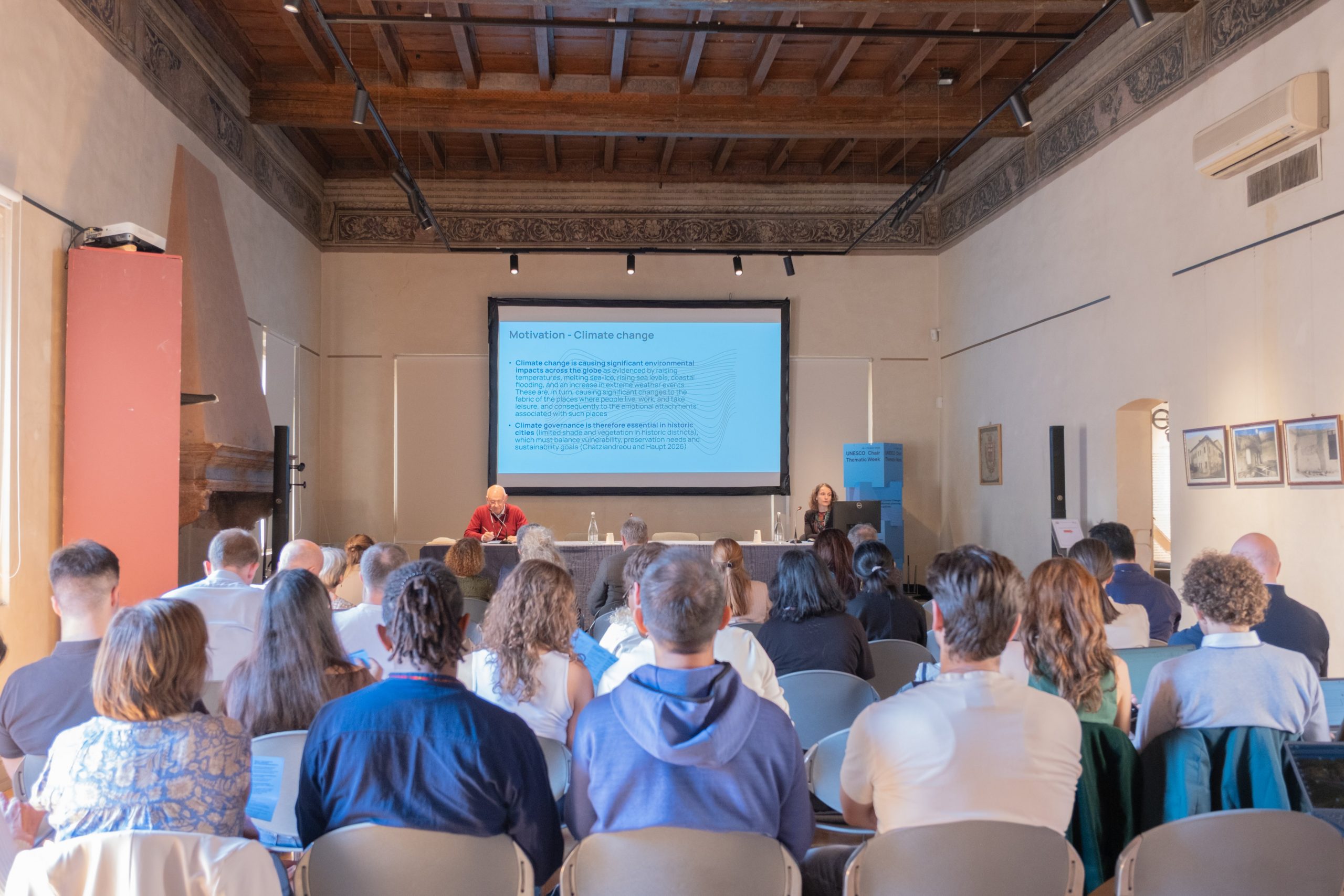
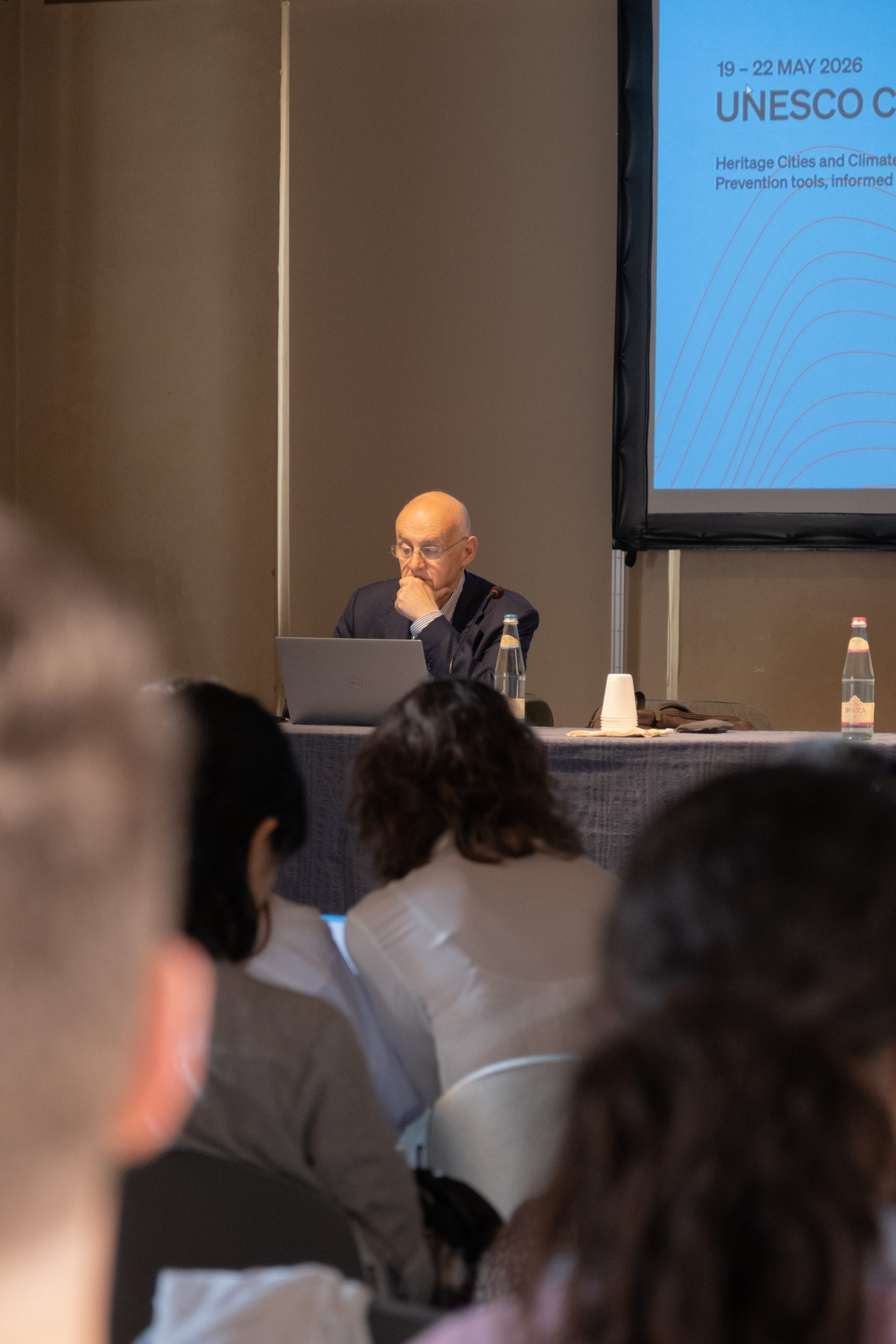
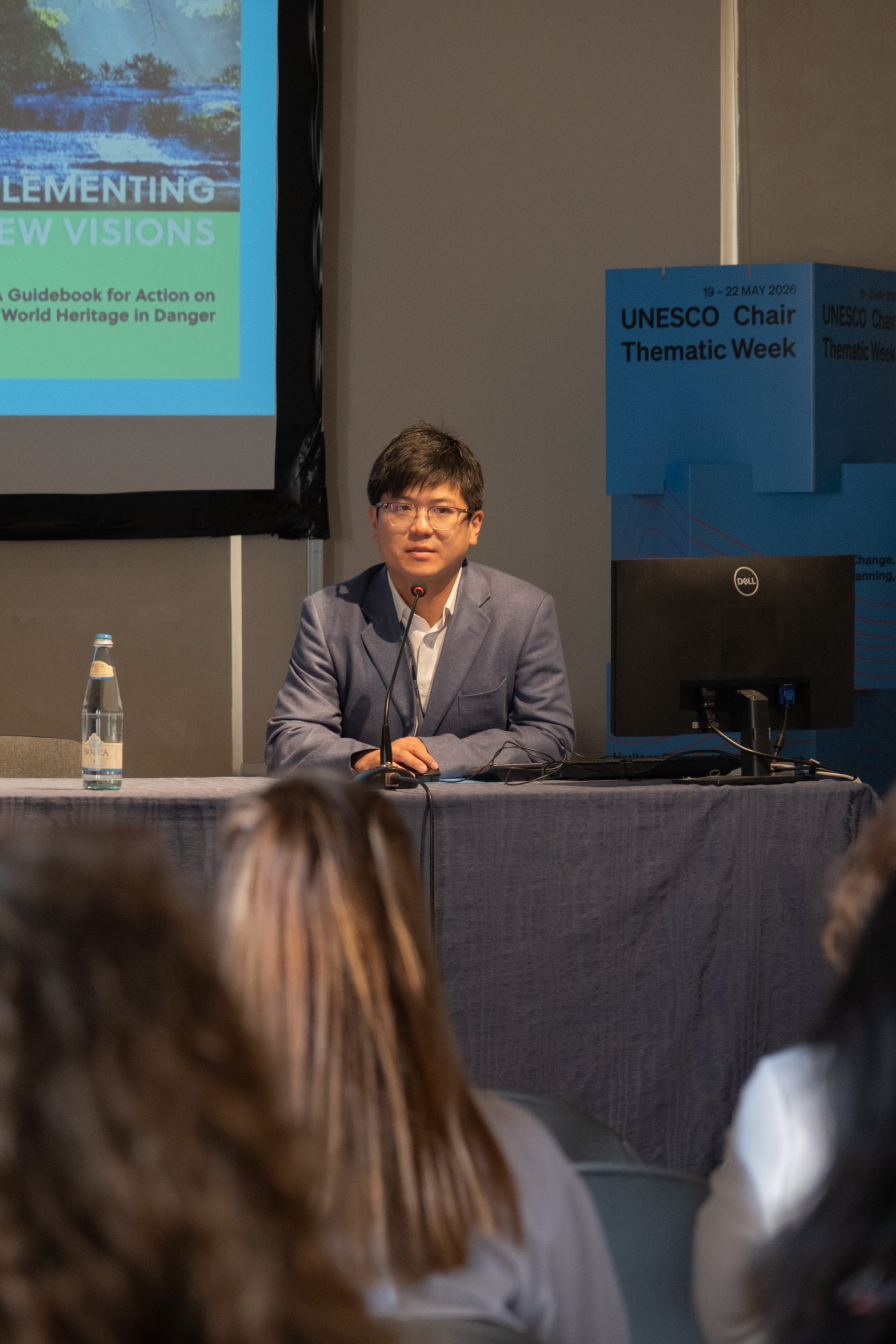
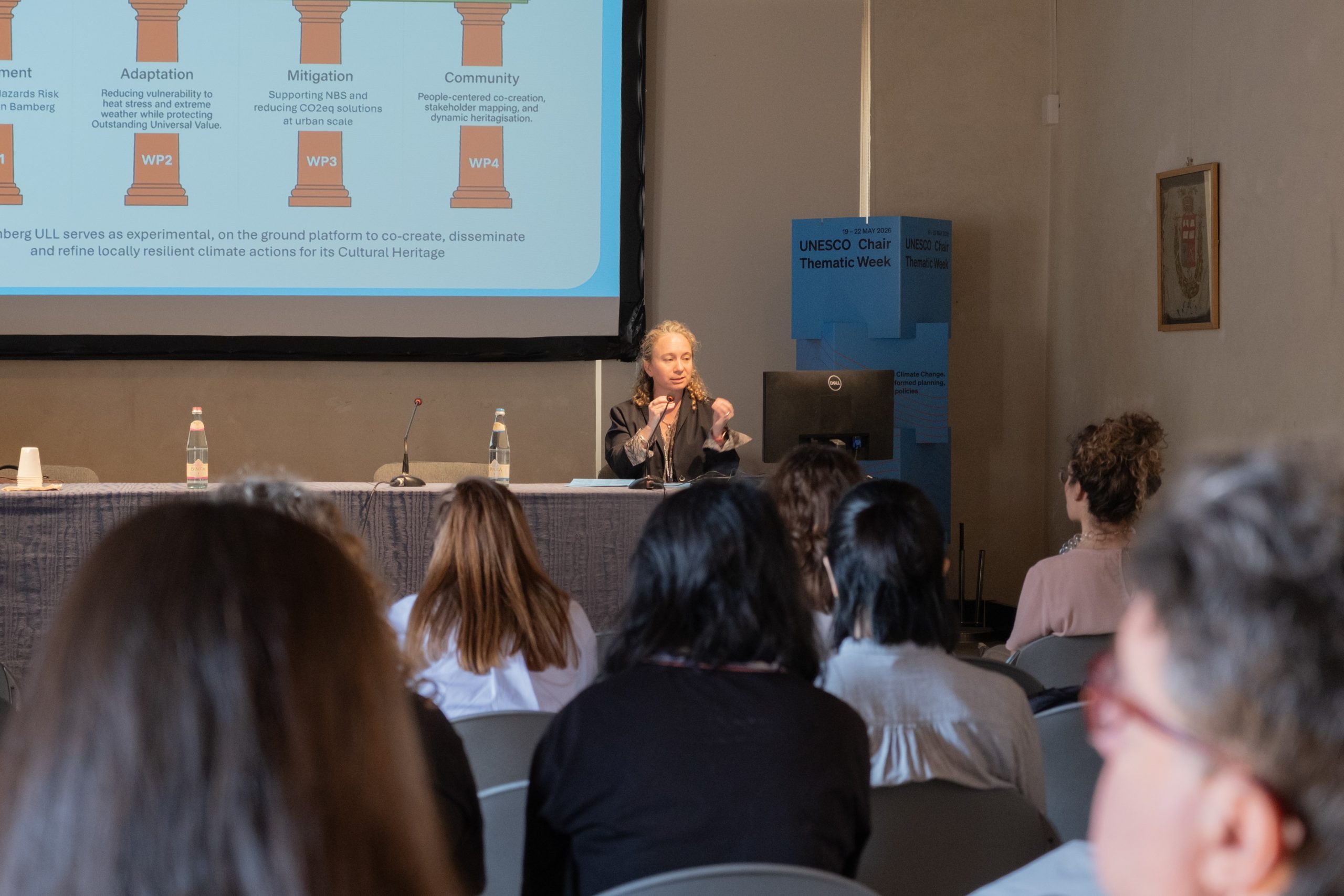
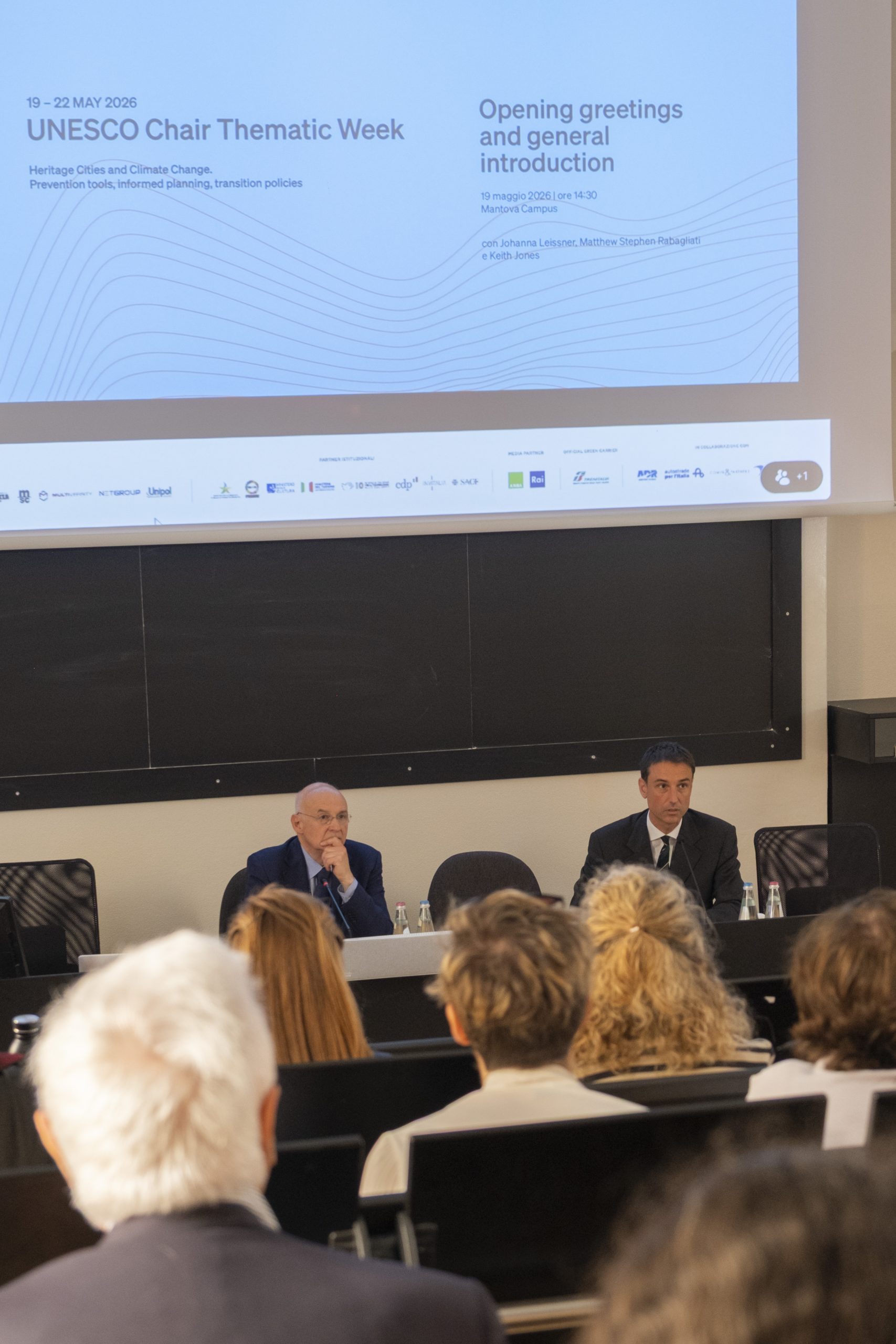
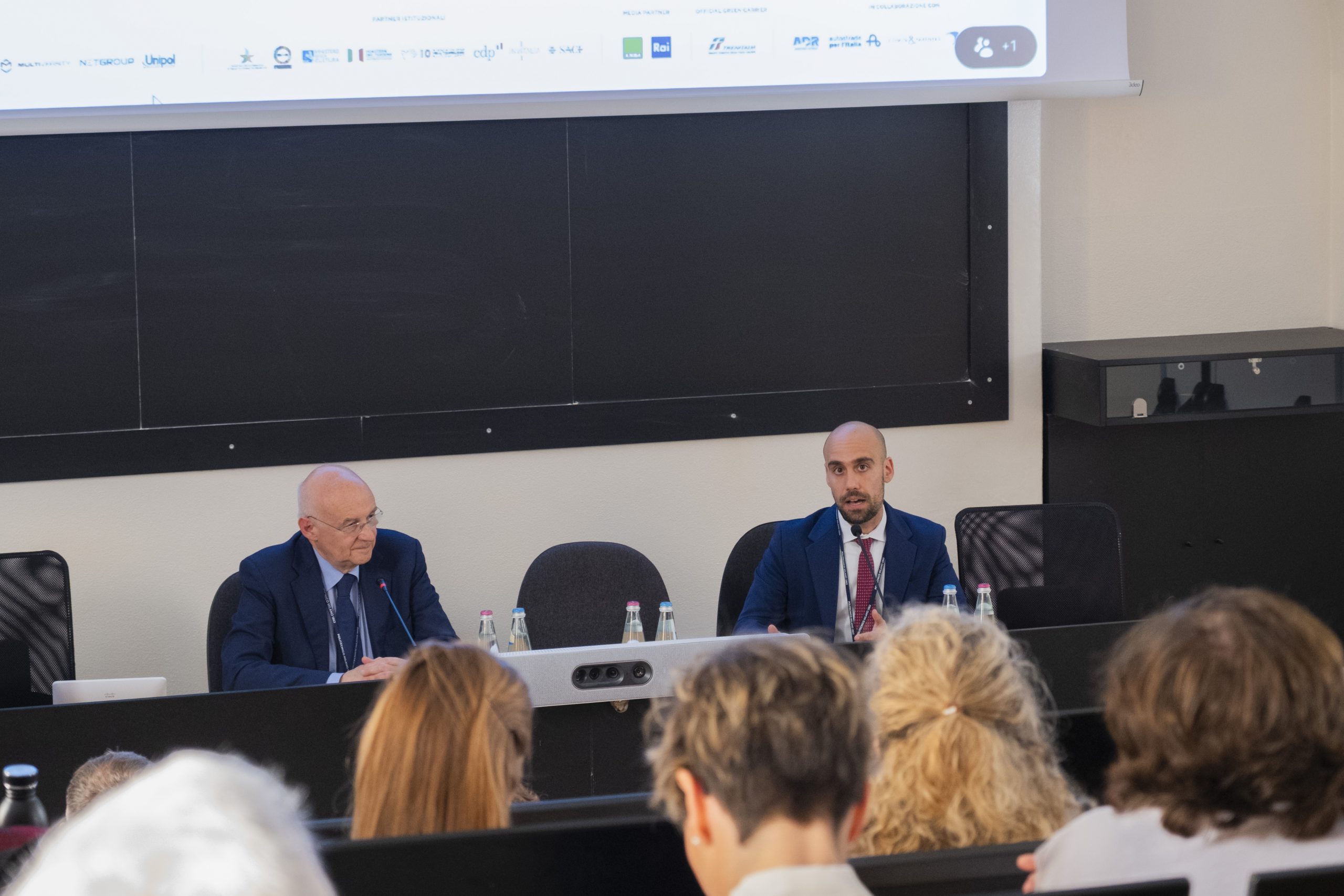
From 19 to 22 May 2026, the UNESCO Chair in Architectural Preservation and Planning in Heritage Cities at the Politecnico di Milano successfully held the second edition of the UNESCO Chair Thematic Week, the annual international forum established to promote critical discussion on topics of strategic relevance to the Chair’s research activities. The 2026 edition was dedicated to the relationship between historic cities and climate change, exploring prevention strategies, risk-informed planning and transition policies for the conservation and management of cultural heritage.

Hosted between the Mantova Campus of the Politecnico di Milano and Casa del Mantegna, and organised within the framework of MANTOVARCHITETTURA, the initiative brought together scholars, researchers and practitioners from universities, research centres, public institutions and UNESCO Chairs across Europe. Over four days, participants discussed emerging challenges and innovative approaches for strengthening the resilience of heritage cities in the face of climate change, fostering dialogue between research, policy and professional practice.
The programme was structured around a progressive exploration of the topic. Following the opening keynote lectures, dedicated to European climate policies for cultural heritage and the role of UNESCO sites as living laboratories for climate action, the thematic sessions addressed:
- risk management at the urban scale, with particular attention to flood risk assessment and digital tools for vulnerability analysis;
- monitoring the effects of climate change on historic urban landscapes, monuments and archaeological sites;
- planning, governance and economic scenarios supporting climate adaptation in heritage cities;
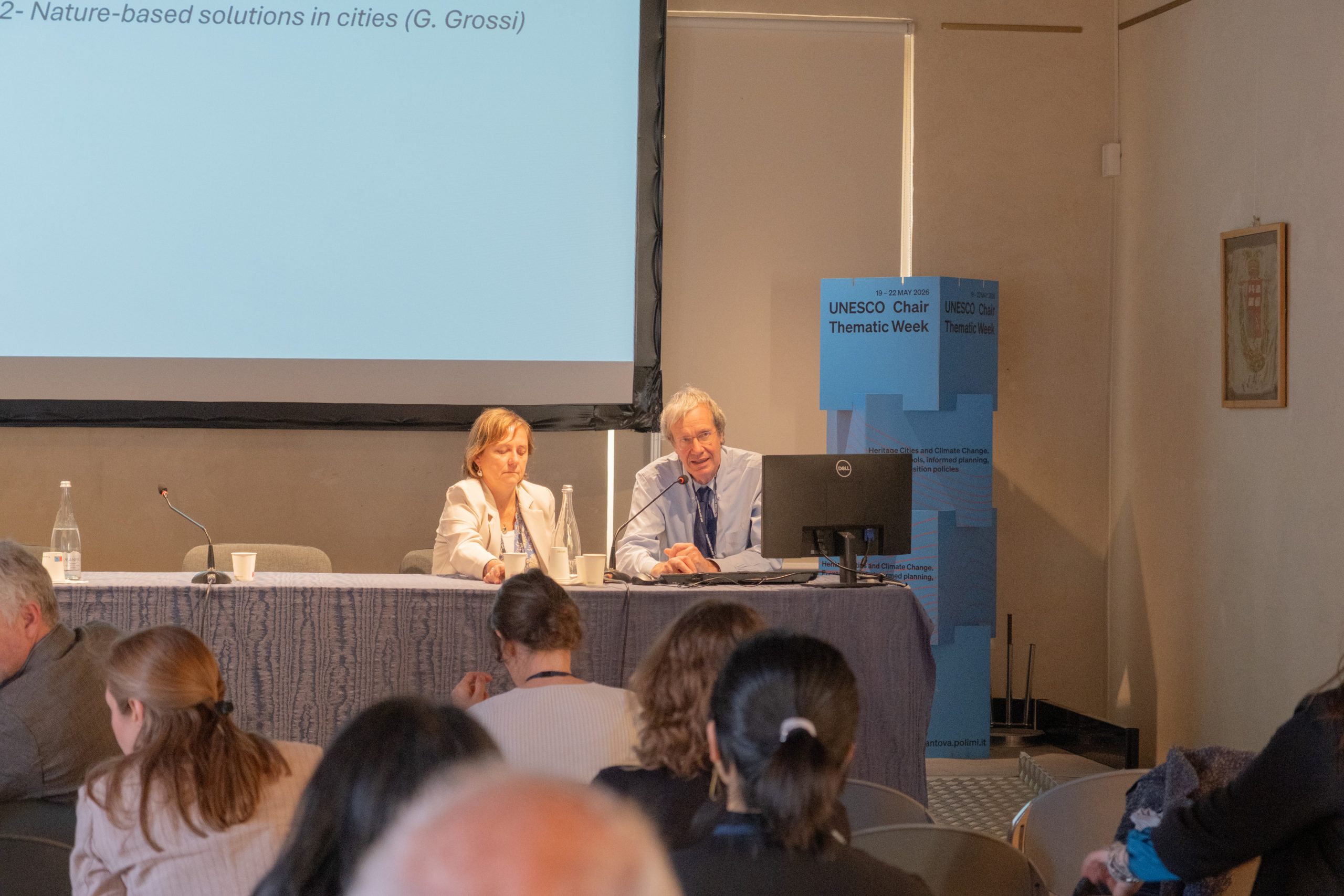
- adaptive measures and nature-based solutions, including experiences developed within international research projects;
- the contribution of artificial intelligence, innovation and interdisciplinary cooperation to future climate policies for cultural heritage.
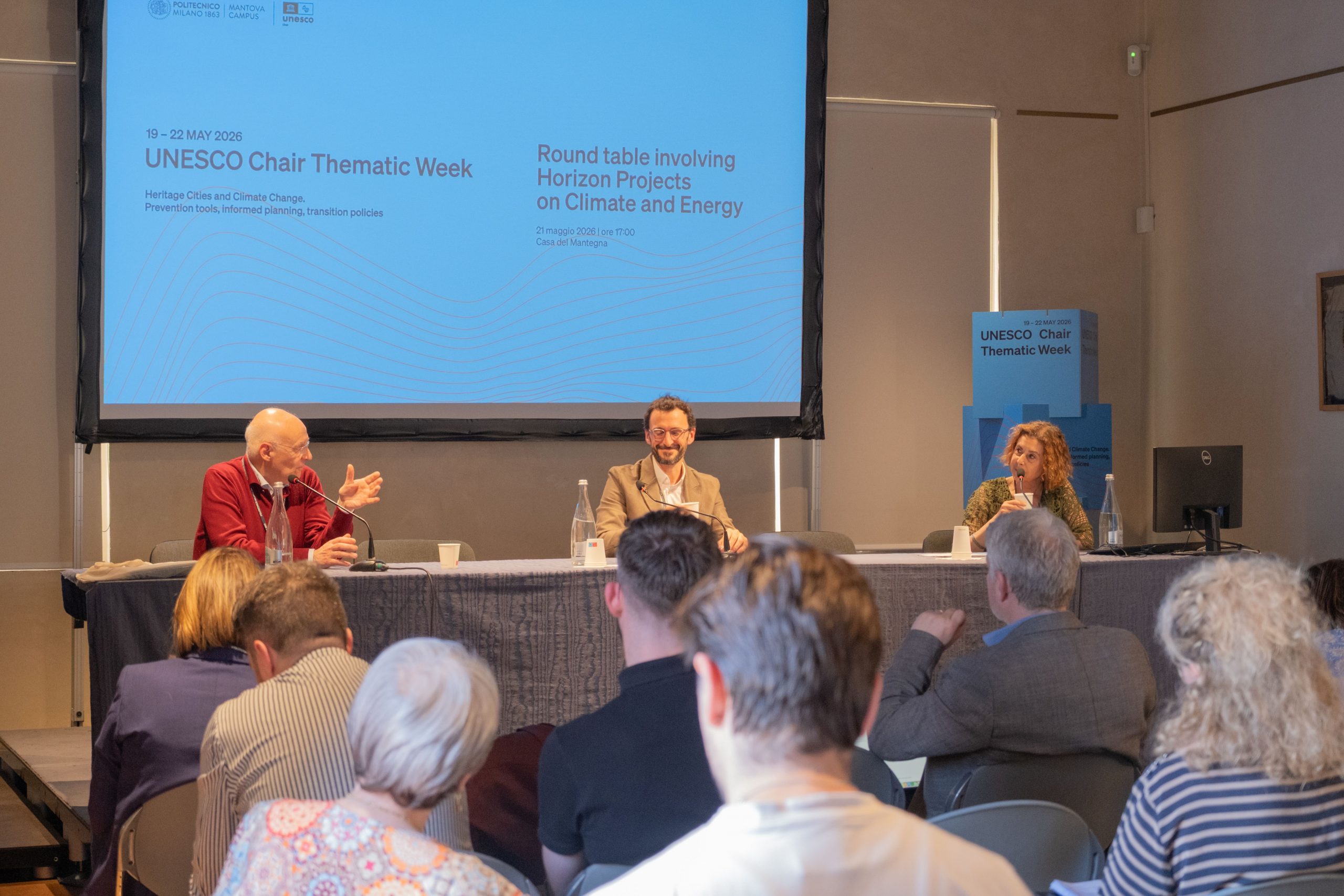
The Week concluded with a round table involving representatives of European Horizon projects and a final discussion that identified future research directions and opportunities for international collaboration. Throughout the event, the Thematic Week confirmed its role as a platform for exchanging knowledge, strengthening international networks and advancing interdisciplinary research on the conservation of heritage cities in a rapidly changing climate.




CONTATTI
Politecnico di Milano
Polo Territoriale di Mantova
Piazza Carlo d’Arco, 3, Mantova
0376 317074